
Embedded electricity networks explained
Live in an apartment, retirement village or caravan park? Your power may come through an embedded electricity network. Here's how they work, what you can be charged, and your options for switching.
On this page
- Quick facts
- What is an embedded electricity network?
- How an embedded network works
- Key terms you'll see on bills and fact sheets
- Where you'll find embedded networks
- Am I in an embedded network? How to check
- Embedded network vs standard connection
- Your rights and price protections in an embedded network
- The national baseline
- New South Wales
- Victoria
- Queensland
- South Australia
- ACT and Tasmania
- Can you leave an embedded network?
- How switching to an authorised retailer works
- What it can cost
- Getting "wired out" of the network entirely
- What happens if your embedded network seller goes out of business
- Energy rebates and concessions in an embedded network
- How to make a complaint
- What's changing for embedded networks
- Pros and cons of embedded networks
An embedded electricity network is a private electricity network that supplies several homes or businesses from a single connection to the grid.
If you live in an apartment block, retirement village, caravan park or residential park, there's a fair chance your power comes through one. That changes who bills you, what you can be charged and how easy it is to switch.
This guide explains how embedded networks work, how to check if you're in one, the price caps and protections that apply in each state, and the reforms arriving in 2026 and 2027.
Quick facts
- In an embedded network, the site owner or operator buys electricity in bulk through one "parent" meter and sells it to residents, whose use is measured by individual "child" meters.
- Most embedded network sellers are "exempt sellers", which means they hold an exemption from the Australian Energy Regulator (AER) rather than a full retailer authorisation.
- Under the AER's exemption conditions, residential customers can't be charged more than the standing offer prices of the local area retailer.
- In Victoria, the Essential Services Commission caps embedded network prices at the Victorian Default Offer.
- You have the right to buy electricity from an authorised retailer instead, but switching can be hard, may require a meter upgrade you pay for, and you'll still pay network charges to the embedded network.
- In NSW, embedded network sellers have had to join the Energy & Water Ombudsman NSW since 1 July 2026, and IPART expects its new maximum prices to take effect in the first half of 2027.
- The NSW Government estimates more than 95,000 NSW households are in electricity embedded networks, and the Victorian Government puts the number of Victorians in residential embedded networks at more than 140,000.
What is an embedded electricity network?
An embedded electricity network (often shortened to "embedded network") is a privately owned electricity network inside a building or site that supplies more than one home or business. The AER describes it as a site wired so that the owner can sell energy to all the tenants and residents there.
In a standard connection, your home has its own meter connected to the local distributor's poles and wires, and you choose your own retailer. In an embedded network, the whole site connects to the grid through one shared connection.
The owner or operator buys electricity in bulk, usually from a retailer, then on-sells it to the people living or trading on the site. In some cases the electricity sold is generated on site, for example by rooftop solar on a shared roof.
The NSW Government notes that embedded networks can lower costs by sharing infrastructure and making it easier to install shared solar panels and heat pump hot water systems. The trade-off is that residents have less choice and, until recently, fewer protections than customers with a standard connection.
How an embedded network works
An embedded network has a few moving parts. Victoria's Department of Energy explains that the site connects to the local distributor's grid through a "parent meter", which measures the electricity used by everyone on the site. Each home or tenancy then has its own "child meter" that measures its share.
The embedded network operator may be the property owner, the owners corporation or a third-party company acting on their behalf. That's why many residents receive bills from a specialist embedded network company rather than from their building manager.
Electricity reaches the whole site through one parent meter, and the operator bills each home for what its own child meter records.
Key terms you'll see on bills and fact sheets
| Term | What it means |
|---|---|
| Parent meter | The meter where the whole site connects to the distributor's network. It measures total use for the site. |
| Child meter | The meter for an individual home or tenancy inside the embedded network. |
| Embedded network operator | The owner or manager of the private network on site, such as a building owner, owners corporation, park or village operator. |
| Exempt seller | A business that sells electricity inside an embedded network under an AER exemption instead of a retailer authorisation. Sometimes called an on-seller. |
| Authorised retailer | A licensed energy retailer, such as the ones you'd compare for a standard home. |
| Embedded network manager (ENM) | An AEMO-accredited provider that helps embedded network customers access retailer offers, including allocating each child meter a National Metering Identifier. |
| National Metering Identifier (NMI) | The unique number a retailer needs to register your meter in the national energy market and bill you directly. |
| On-market / off-market | On-market means you buy from an authorised retailer. Off-market means you buy from the site's exempt seller. |
Where you'll find embedded networks
Embedded networks are commonly found in:
- apartment buildings
- retirement villages
- caravan and long-stay parks
- shopping centres
- office blocks
- industrial parks
- university and health campuses
- airports.
Not every building of these types has an embedded network. Some developments are built with each lot connected directly to the distributor's grid, in which case you're a standard customer with a choice of retailer.
Am I in an embedded network? How to check
The quickest test is to look at who sends your electricity bill. If it comes from your building owner, strata manager, park or village operator, or a company you've never heard of rather than a familiar retailer, you're probably in an embedded network. These checks will confirm it.
- Check the name on your bill. Victoria's Department of Energy lists some of the larger embedded network agents, including WINConnect, Energy On, Active Utilities, ENSA, Energy Intelligence, SUPA Energy, Network Energy Services and Seene. If one of these bills you, you're in an embedded network.
- Look at your move-in paperwork. In NSW, your seller must give you written information about your rights when you move in, including its name and contact details, and those details must also appear on your bill.
- Try to compare retailers. The same Victorian guidance says that if you're unable to switch energy providers, you're in an embedded network.
- Search the exemption register (Victoria). The Essential Services Commission's Register of Exempt Persons lets you search by address.
- Ask. IPART suggests contacting the company that bills you, or the manager of your complex, retirement village or residential park.
If you're renting in Victoria, Consumer Affairs Victoria says your rental provider must tell you before you sign the lease if the property gets its electricity from an embedded network, including the network's trading name, ABN, contact details and tariffs.
A bill from a big-name retailer doesn't automatically rule it out. Some authorised retailers, such as Origin Energy, also operate embedded networks.
Embedded network vs standard connection
| Standard connection | Embedded network | |
|---|---|---|
| Who sells you electricity | An authorised retailer you choose | Usually the site's exempt seller, unless you switch to an authorised retailer |
| Meter | Your own meter on the distributor's network | A child meter behind the site's parent meter |
| Can you shop around? | Yes, any retailer in your area | Legally yes, but few retailers make offers and you may need a new meter |
| Network charges | Included in your retailer's bill | Billed by the embedded network, even if you switch retailer |
| Price protection | Regulated caps on standing offers, such as the Default Market Offer or Victorian Default Offer | Capped at the local standing offer (AER conditions) or the Victorian Default Offer in Victoria, with new IPART caps coming in NSW |
| Free ombudsman | Yes | Yes for residential customers in most states (details below) |
| Government rebates | Applied by your retailer | Often a separate application to a state agency |
Your rights and price protections in an embedded network
Being in an embedded network doesn't mean you have no protections. Exempt sellers have to follow conditions set by the AER (or, in Victoria, the Essential Services Commission), and each state adds its own rules on top.
The national baseline
The AER says residential customers buying from an exempt seller are entitled to:
- flexible payment options if you're in financial difficulty
- clear, set time frames for receiving and paying bills
- complaints handling arrangements
- energy charges no higher than the standing offer prices the local area retailer can charge
- clear and reasonable disconnection procedures.
Your seller must tell you about these rights at the start of your agreement and give you a copy of its exemption conditions. Exempt sellers and network operators that supply residential customers must also join the energy ombudsman scheme in their state or territory where membership is available.
The AER tightened these rules in its August 2025 review of the exemptions framework. The updated guidelines added family violence protections, required some exempt sellers to publish their customer tariffs, and required some to print ombudsman contact details on bills.
From 1 January 2026, most new embedded networks must register an exemption with the AER instead of relying on a deemed exemption.
New South Wales
NSW has the most active reform program. Under regulations that started on 1 July 2026, embedded network sellers must:
- be a member of the Energy & Water Ombudsman NSW (EWON)
- publish and keep up to date on their website the services they provide, the prices they charge and the addresses they supply
- publish energy efficiency information if they provide centralised air-conditioning.
The bigger change is still to come. IPART will set maximum prices for electricity, gas, hot water and centralised air-conditioning supplied through embedded networks, along with a billing standard. IPART expected to determine and publish the maximum prices in September 2026, subject to Ministerial approval, with the caps and billing standard expected to start in the first half of 2027. Once they apply, sellers can charge at or below the maximum price but not above it.
IPART is clear that the caps won't necessarily lower every bill, because some sellers already charge less than the expected maximum. Residents of land lease communities already have separate maximum electricity prices set by IPART, which remain until the broader embedded network caps start.
Victoria
Victoria regulates embedded networks through its own licensing exemption framework, administered by the Essential Services Commission (ESC). The key protections are:
- A price cap. The Victorian Default Offer has been the maximum price for embedded network customers since September 2020, covering all households and most businesses.
- A free ombudsman. All embedded networks must be members of the Energy and Water Ombudsman (Victoria).
- Code protections. The ESC's Energy Retail Code of Practice and Electricity Distribution Code of Practice cover contracts, billing disputes, payment difficulty, planned outage notices, life support and disconnection rules.
- A ban on most new residential networks. Since 1 January 2023, new embedded networks with ten or more residential customers aren't allowed unless all residential energy used on site is renewable, with at least 5% generated on site.
The Victorian Government acknowledges that embedded network customers don't yet have all the same protections as customers of licensed retailers. A planned second phase of reforms would move embedded networks into Victoria's licensing framework and let residents choose their own retailer.
Queensland
Queensland uses the national AER framework, so the baseline protections above apply. What operators can charge is also governed by state laws that depend on where you live: the Manufactured Homes (Residential Parks) Act 2003 for residential parks, the Residential Tenancies and Rooming Accommodation Act 2008 for tenancies (including caravans and rented manufactured homes), and the Body Corporate and Community Management Regulation 2008 for body corporates.
South Australia
South Australia also uses the AER framework. The Energy and Water Ombudsman SA confirms residential customers are protected by a cap at the standing offer price, notice of price changes no later than your next bill, a hardship policy and limits on when you can be disconnected. Embedded network operators supplying residential customers must join EWOSA, but those supplying only business customers don't have to.
ACT and Tasmania
The AER's Retail Exempt Selling Guideline applies in every national-framework jurisdiction except Victoria, so the national baseline protections above are the main rules for ACT and Tasmanian embedded network customers.
Can you leave an embedded network?
Yes, in principle. In the national framework, embedded network customers can buy electricity from either the exempt seller or an authorised retailer, and EWON says the embedded network owner isn't allowed to stop you or pressure you not to change.
In practice, it's often hard, because the AER notes that some sites are wired in a way that makes it difficult, and many retailers don't want to sell to customers inside an embedded network.
How switching to an authorised retailer works
The process of switching from an embeddedn network to an authorised retailer involces three steps.
- Find a retailer that will take you on. You need an authorised retailer willing to offer you a market contract. Retailers don't have to accept you, so expect to shop around.
- Tell your current seller. You or your new retailer must notify the embedded network operator that you're moving to an authorised retailer.
- Get your meter registered. The embedded network operator appoints an embedded network manager, which gives your child meter a National Metering Identifier so the retailer can register it in the national market and start billing you.
What it can cost
- A new meter. If your meter doesn't meet current standards, it may need replacing, and you may have to pay.
- Wiring upgrades. EWOSA warns that wiring may also need upgrading, and that the costs could be high.
- Network charges twice over. The embedded network operator can still recover network costs from you after you switch. To avoid paying them twice, the AER recommends checking that your new retailer gives you an "energy only" offer, or that the operator and retailer agree on who bills you for network charges. You may end up with two bills: one from your retailer for the electricity you use, and one from the embedded network for network charges.
If you rent, talk to your landlord before you start, as they may not agree to the change.
Getting "wired out" of the network entirely
The other option is to have your home disconnected from the embedded network and connected directly to the distributor's grid. This may need infrastructure changes, can take a long time, and the distributor or retailer may ask you to contribute to the cost. Your local distributor can tell you what's involved for your building.
What happens if your embedded network seller goes out of business
If your seller looks likely to fail, the AER says the best immediate option is to find another authorised retailer to take over the embedded network. It publishes a list of retailers that have agreed to be contacted in this situation, though none is obliged to take you on.
Sellers must notify the AER straight away if they may be unable to keep selling energy. In Victoria, the ESC has a separate guide for this.
Energy rebates and concessions in an embedded network
You can still get state energy rebates in an embedded network, but you usually have to apply to a government agency yourself instead of asking a retailer to apply it to your bill. For a full list of what's available in each state, see our guide to electricity rebates in Australia.
NSW. NSW Climate and Energy Action pays embedded network customers $313.50 a year under the Low Income Household Rebate, compared with up to $285 for retail customers. Embedded network customers apply online or by post and the rebate is paid into their bank account. Some embedded network providers, including ARC Energy Group, Energy Locals and Origin Energy (including most WINConnect sites), deliver rebates directly, so check with your provider first.
Victoria. Concession card holders in an embedded network can apply for the Non-Mains Energy Concession through the Victorian concessions and allowances portal. In many retirement and lifestyle villages, management applies on residents' behalf with their consent.
Other states. Ask your embedded network seller how concessions are handled at your site, and check your state government's concessions page.
How to make a complaint
Start with your embedded network seller. If that doesn't resolve it, take it to your state's energy ombudsman, which is free and independent.
| State | Ombudsman | Phone |
|---|---|---|
| NSW | Energy & Water Ombudsman NSW | 1800 246 545 |
| Victoria | Energy and Water Ombudsman (Victoria) | 1800 500 509 |
| South Australia | Energy and Water Ombudsman SA | 1800 665 565 |
For Queensland, the ACT and Tasmania, the AER links to each state and territory ombudsman. In NSW, IPART also accepts reports of sellers breaching the new rules at electricity@ipart.nsw.gov.au. In Victoria, you can report an embedded network that isn't an EWOV member to the ESC at exemptionregister@esc.vic.gov.au.
What's changing for embedded networks
Rules for embedded networks have tightened steadily, and the biggest price changes for NSW customers are still ahead.
| Date | Change | Where |
|---|---|---|
| 2027–28 | The Default Market Offer is expected to extend to small customers in embedded networks from DMO 9 | National framework |
| First half of 2027 | IPART maximum prices and billing standard expected to start for electricity, gas, hot water and centralised air-conditioning. | NSW |
| 1 July 2026 | Sellers must join EWON and publish their services, prices and supply addresses. | NSW |
| 1 January 2026 | Most new embedded networks must register an AER exemption. | National framework |
| 26 November 2025 | Energy Legislation Amendment Act passed, giving IPART price-setting powers. | NSW |
| 29 August 2025 | AER publishes revised exemption guidelines with new consumer protections. | National framework |
| 1 January 2023 | Ban on new residential embedded networks with ten or more customers, unless they meet the renewable condition. | Victoria |
| September 2020 | Victorian Default Offer becomes the maximum embedded network price. | Victoria |
The Victorian Government's Embedded Networks Review page, last updated in February 2025, doesn't give a start date for its second phase of reforms, which would move embedded networks into the state licensing framework and give residents access to competitive retail offers.
Pros and cons of embedded networks
| Potential benefits | Common problems |
|---|---|
| Shared infrastructure can lower costs for residents | Concerns that residents pay higher prices |
| Easier to install shared solar and heat pump hot water systems | Fewer consumer protections than customers of licensed retailers |
| Price caps tied to standing offers or the VDO limit the worst-case price | Barriers to choosing your own retailer |
| Rebates often need a separate application |
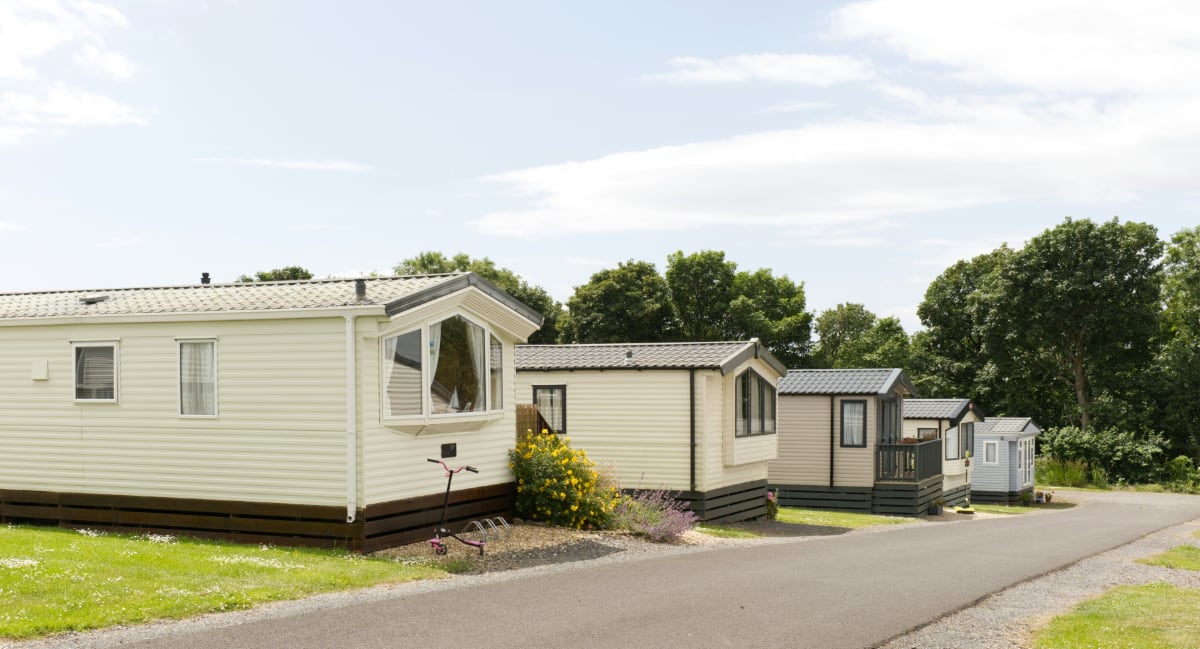
Photo by Kevin Dowling on Unsplash
See if you can save
Enter your address and compare plans from Australia's leading retailers.
Frequently asked questions
What does embedded network mean?
How do I know if my electricity is from an embedded network?
How do I get out of an embedded network?
Are embedded networks banned?
Can an embedded network charge more than a normal retailer?
Do I have to pay network charges if I switch retailer?
Who regulates embedded networks?
Can I get energy rebates in an embedded network?
Keep reading
Electricity daily supply charge explained: what it is and when a lower one saves you money
The daily supply charge is the fixed amount you pay each day to stay connected to the grid. Here's what it covers, why it varies, and how to work out whether a lower one suits your household.
Home energy audit: how to find where your energy goes
An energy audit shows where your household's energy goes and which changes will cut your bill the most. This guide covers a step-by-step DIY home audit and more tips to save energy in your home.
Controlled Load explained: What CL1 and CL2 mean on your electricity bill
Controlled load is a separately metered circuit, usually for your hot water system, that runs only when the network switches it on. In exchange, you pay a much lower rate.