
Electricity daily supply charge explained: what it is and when a lower one saves you money
The daily supply charge is the fixed amount you pay each day to stay connected to the grid. Here's what it covers, why it varies, and how to work out whether a lower one suits your household.
On this page
- Quick facts
- What is the electricity daily supply charge?
- Daily supply charge vs usage charge
- What the daily supply charge pays for
- Why daily supply charges differ between homes
- Your network
- Your plan
- Why daily supply charges have gone up
- Is a plan with a low daily supply charge cheaper?
- Working out your break-even point
- Who usually benefits from a low daily supply charge
- How to find a plan with a lower daily supply charge
- Daily supply charges by state
- Can you avoid paying the daily supply charge?
Every electricity bill in Australia includes a daily supply charge. It's the fixed amount you pay for each day your home is connected to the grid, and it applies whether you use a lot of electricity, a little, or none at all.
Because it doesn't change with your usage, the daily supply charge is easy to overlook when comparing plans. For some households it makes up a large part of the bill, and a plan with a lower supply charge can save money. For others, a low supply charge comes paired with a higher usage rate that costs more over a year.
This guide explains what the daily supply charge covers, why it differs between networks and retailers, and how to work out which type of plan suits your household.
Quick facts
- The daily supply charge is a fixed cost for each day your property is connected to the electricity network, and it applies even if you use no electricity.
- It mainly recovers the cost of the poles, wires and meters that deliver electricity to your home, along with some of your retailer's costs of running your account.
- The amount depends on your distribution network and your plan, so two homes in the same state can pay very different daily supply charges.
- A plan with a low daily supply charge often has a higher usage rate, so it usually suits households that use less electricity.
- You can find the daily supply charge for any plan in its Basic Plan Information Document, or in its Energy Fact Sheet if you live in Victoria.
What is the electricity daily supply charge?
The NSW Government describes the fixed charge, sometimes called a supply charge, as a daily charge that applies even if you don't use any energy. It covers the cost of transporting energy to your home, keeping you connected to the grid and maintaining the poles and wires, along with services such as customer administration and meter reading.
On your bill, it's usually shown as a rate in cents or dollars per day, multiplied by the number of days in the billing period. A 90-day bill, for example, includes 90 days of supply charges.
Retailers don't all use the same label. Depending on your retailer, you might see it listed as the supply charge, daily supply charge, fixed charge or daily charge.
Daily supply charge vs usage charge
Your electricity bill has two main charges. The supply charge is a fixed daily cost for having electricity connected to your property, while the usage charge is what you pay for each kilowatt hour (kWh) of electricity you use.
The usage charge rises and falls with how much electricity you consume. The daily supply charge doesn't. If you halve your usage, your usage charges roughly halve, but your supply charges stay exactly the same.
This is why the supply charge makes up a bigger share of the bill for households that use less electricity. A single person in an apartment and a family of five in a large house can be on the same plan and pay the same daily supply charge, but the family pays far more in usage charges.
For a line-by-line breakdown of everything else on your bill, see our guide to understanding your electricity bill.
What the daily supply charge pays for
Most of the daily supply charge goes towards network costs. Your electricity distributor owns and maintains the poles, wires and substations in your area, and distributors charge your retailer for this through network tariffs, which the retailer then passes on to you as part of your overall price.
Network costs are a large share of what households pay. In the AER's 2026–27 Default Market Offer final determination, network costs made up between 39% and 54% of the regulated price, depending on the region.
Not every network cost ends up in the supply charge. Some of the costs of supplying electricity are fixed, meaning every household pays the same, while others vary with the amount of electricity used. That's why electricity plans include both a fixed and a variable part.
Why daily supply charges differ between homes
Two things decide the daily supply charge you pay: the network you're connected to, and the plan you're on.
Your network
Australia has several electricity distribution networks, and each one has its own network tariffs. Regulated reference prices are set separately for each network, which is why households in Sydney, Western Sydney and regional NSW face different benchmark supply charges even though they're all in the same state.
If you're not sure which network supplies your home, our guide to finding your electricity distributor explains how to check using your postcode or the first digits of your NMI.
Your plan
Retailers decide how to pass their costs on to customers. Each retailer chooses how to manage its costs across its customers through the pricing plans it offers, and can structure its prices differently from other retailers.
In practice, this means two retailers on the same network can charge quite different daily supply charges. A single retailer may also offer several plans with different combinations of supply charge and usage rate.
Your tariff type matters too. Time-of-use plans can carry a different supply charge from flat rate plans, and homes with a controlled load circuit can pay a separate, smaller daily supply charge for that circuit. The AER's 2026–27 tariff caps include separate controlled load supply charges for most networks.
Why daily supply charges have gone up
Many households noticed a larger daily supply charge when prices changed in July 2026, even where usage rates fell.
Part of the reason is a change in how regulated prices are set. From the 2026–27 pricing year, the AER is required to set the Default Market Offer (DMO) as tariff caps, with a maximum daily supply charge and maximum usage charges. In doing so, the AER assigns fixed costs to the daily supply charge and variable costs to the usage charge, an approach it describes as cost reflective and transparent.
The DMO only caps prices for standing offers in NSW, South East Queensland and South Australia, but it is also the comparison price for market offers in those regions, so it influences how retailers price their own plans.
Network costs have also risen. In the same determination, the AER noted that network charges for 2026–27 mostly increased compared with the previous year, driven by factors including transmission costs, inflation and the recovery of previously under-recovered revenue.
Regulated prices are reviewed every year and apply from 1 July. If your retailer sends you a price change notice, check the daily supply charge as well as the usage rate, since the two don't always move in the same direction.
Is a plan with a low daily supply charge cheaper?
Not always. Because retailers recover their costs across both charges, a lower daily supply charge often comes with a higher usage rate, and a higher supply charge often comes with a lower usage rate. Which plan works out cheaper depends on how much electricity you use.
The example below uses two simplified plans with round numbers to show how this works. These are illustrative figures only, not real plans.
| Plan A: low supply charge | Plan B: higher supply charge | |
|---|---|---|
| Daily supply charge | $1.00 per day | $1.60 per day |
| Usage rate | 30 cents per kWh | 25 cents per kWh |
| Supply charges over a year | $365 | $584 |
| Annual cost at 2,000 kWh a year | $965 | $1,084 |
| Annual cost at 6,000 kWh a year | $2,165 | $2,084 |
For a household using 2,000 kWh a year, Plan A is $119 cheaper because the lower supply charge saves more than the higher usage rate costs. For a household using 6,000 kWh a year, Plan B is $81 cheaper because the lower usage rate adds up over more kilowatt hours.
Working out your break-even point
You can find the point where two plans cost the same with a simple calculation:
Break-even usage (kWh per year) = (difference in daily supply charge × 365) ÷ difference in usage rate
In the example above, Plan B's supply charges cost $219 more a year ($0.60 × 365), and each kWh is 5 cents cheaper. Dividing $219 by $0.05 gives a break-even point of 4,380 kWh a year, or about 12 kWh a day. A household using less than that pays less on Plan A, and a household using more pays less on Plan B.
To use this with real plans, take your total usage from your last bill and divide it by the number of days in the billing period to get your average daily usage. Seasonal bills vary, so a full year of bills gives you the most reliable figure.
Who usually benefits from a low daily supply charge
A plan with a low daily supply charge tends to suit households that use relatively little electricity from the grid. That includes single-person households, small apartments, holiday homes that sit empty for part of the year, and homes with rooftop solar that cover much of their own daytime use.
A plan with a lower usage rate tends to suit households that use a lot of electricity, such as larger families, homes with electric heating or a pool, and households that charge an electric vehicle at home.
If you have solar, the feed-in tariff on each plan also affects which one comes out ahead. Our guide to solar feed-in tariffs covers current rates by state.
How to find a plan with a lower daily supply charge
Start with your current bill, which shows your daily supply charge and how many days you were charged for. This gives you a baseline to compare against.
Next, look at the plan information documents for any plan you're considering. In NSW, Queensland, South Australia, the ACT and Tasmania, retailers must provide a Basic Plan Information Document (BPID) for their plans, and must link to it clearly wherever they advertise the plan. In Victoria, retailers provide an Energy Fact Sheet for each offer in a consistent format set by the Essential Services Commission. Both documents list the plan's daily supply charge alongside its usage rates.
When you compare, check that you're looking at the same tariff type, since a time-of-use plan and a flat rate plan aren't directly comparable on supply charge alone. Then compare the estimated annual cost for your usage rather than the supply charge on its own, using the break-even calculation above.
Retailers in DMO regions must also show how their offers compare with the regulated reference price, so the percentage above or below the DMO or Victorian Default Offer in a plan's advertising is a useful shortcut for comparing total cost.
If you'd rather not work through plan documents yourself, the Utility Club team can compare plans available on your network and explain how the supply charge and usage rate on each one suit your household's usage.
Daily supply charges by state
Who sets the benchmark daily supply charge depends on where you live.
In NSW, South East Queensland and South Australia, the AER sets the Default Market Offer each year for each network: Ausgrid, Endeavour Energy and Essential Energy in NSW, Energex in South East Queensland, and SA Power Networks in South Australia. In the 2026–27 determination, the Essential Energy network in regional NSW had the highest flat rate daily supply charge cap of these five networks.
In Victoria, the Essential Services Commission sets the Victorian Default Offer for each of the state's five networks. It caps standing offer prices and acts as the reference price that retailers must compare their offers against when advertising.
In regional Queensland, the ACT, Tasmania and Western Australia, regulated electricity prices are set separately by each state or territory's own regulator or government.
For the current regulated daily supply charge on every network in Australia, see our electricity cost per kWh guide, which lists the usage rate and daily supply charge for each distributor.
Can you avoid paying the daily supply charge?
Not while your property is connected and you have an open electricity account. The supply charge applies even if you don't use any energy, so an empty property still builds up supply charges every day the account is open.
If you're moving out, arrange for your account to close on the day you leave so you aren't charged for days you no longer live there. Our moving house guide covers how to time your utility connections and disconnections.
Rooftop solar doesn't remove the supply charge either. Solar can cut your usage charges, sometimes close to zero, but the daily supply charge stays the same because your home is still connected to the grid.
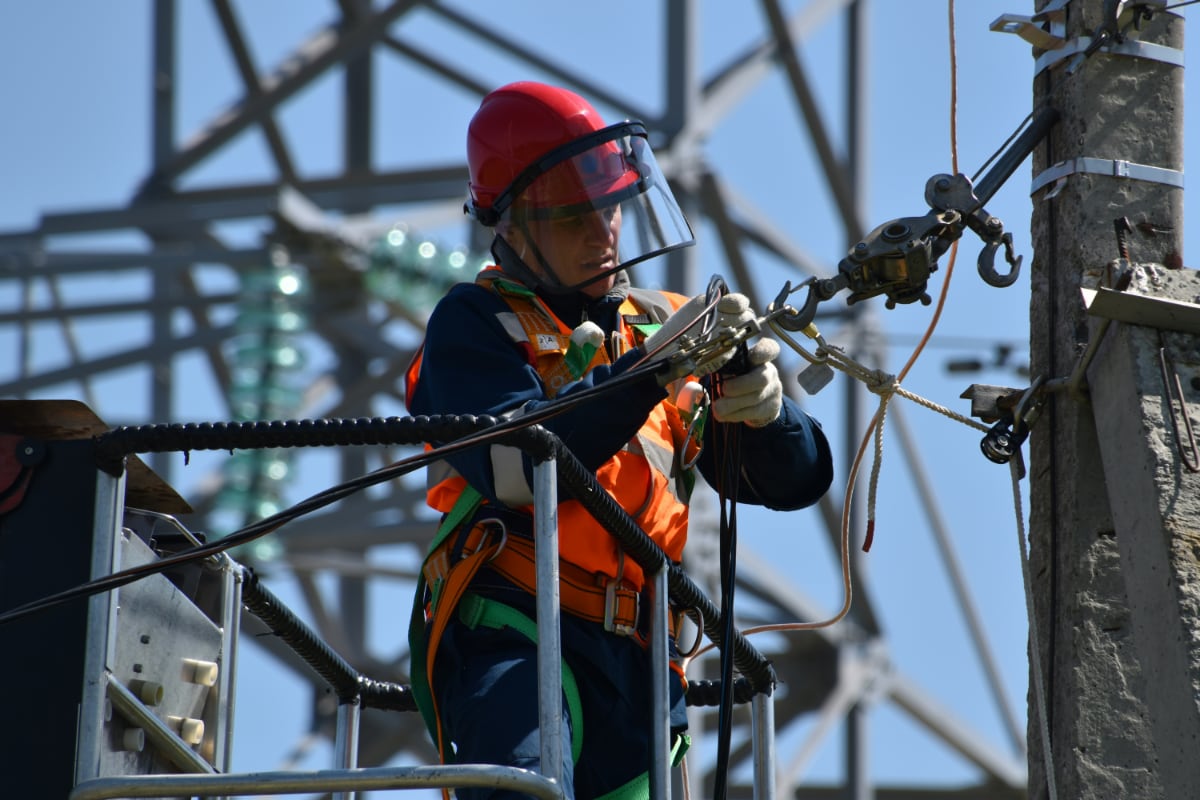
Photo by Anton Dmitriev on Unsplash
See if you can save
Enter your address and compare plans from Australia's leading retailers.
Frequently asked questions
What is the daily supply charge on my electricity bill?
Why is my daily supply charge so high?
Which electricity provider has the lowest daily supply charge?
Do I pay the daily supply charge if I don't use any electricity?
Do tenants pay the daily supply charge?
Is there a daily supply charge for gas as well?
Keep reading

Home energy audit: how to find where your energy goes
An energy audit shows where your household's energy goes and which changes will cut your bill the most. This guide covers a step-by-step DIY home audit and more tips to save energy in your home.
Controlled Load explained: What CL1 and CL2 mean on your electricity bill
Controlled load is a separately metered circuit, usually for your hot water system, that runs only when the network switches it on. In exchange, you pay a much lower rate.
Who is my electricity distributor? How to find yours by state, postcode or NMI
Your electricity distributor owns the poles and wires to your home. Here is how to find yours in every state, what the first digits of your NMI reveal, and why it matters for outages and your bill.