
Smart meters in Australia: How they work, what they cost, and the mandatory rollout explained
Australia's smart meter rollout is now compulsory in most states. Here's what a smart meter does, why you can no longer opt out, what it costs, and how the two-year tariff protection works.
On this page
- Quick facts
- What is a smart meter and how does it work?
- The mandatory smart meter rollout in Australia
- Can I opt out of a smart meter?
- How much does a smart meter cost?
- Benefits of a smart meter
- Common concerns about smart meters
- Will my bill go up?
- Are smart meters safe?
- What happens to my data?
- Will I lose power during installation?
- The two-year tariff protection
- What to expect during installation
- How do I know if I already have a smart meter?
If you haven't had a smart meter installed yet, you probably will soon. A national rule change means every home and small business in Australia will have one by 2030, and you can no longer opt out.
Quick facts
- The smart meter rollout is mandatory in New South Wales, Queensland, South Australia, Tasmania and the ACT, with a 2030 deadline set by the Australian Energy Market Commission (AEMC).
- Victoria already completed its own mandated rollout years ago and has near-universal coverage.
- Western Australia and the Northern Territory sit outside this national scheme and run their own separate meter upgrade programs.
- You cannot opt out of getting a smart meter, but you can ask your retailer to disable its remote communications.
- Installation is free when your retailer initiates it as part of the rollout. Requesting one yourself, ahead of schedule, may attract a fee.
- If your smart meter was installed on or after 1 December 2025, your retailer cannot change your tariff structure for two years without your explicit consent.
- ARPANSA and the World Health Organisation have found no established health effects from the low-level radio frequency emissions smart meters use.
What is a smart meter and how does it work?
A smart meter is a digital electricity meter that measures your usage at regular intervals, typically every 30 minutes, and sends that data automatically to your electricity distributor and retailer.
That removes the need for someone to visit your property to read the meter. It also means you will no longer receive estimated bills based on a guess of what you've used since the last read.
In Victoria, meters installed since December 2018 can record usage in five-minute intervals, which is what enables more precise time-of-use pricing.
Data from your smart meter travels over an encrypted connection, usually via the mobile network, to a secure metering data management system before it reaches your retailer for billing.
The mandatory smart meter rollout in Australia
In November 2024, the AEMC made a final rule requiring universal smart meter deployment across the National Electricity Market by 2030. According to the AEMC's own announcement, the reforms are being implemented progressively from December 2024 to July 2026, with the accelerated phase of the rollout beginning in December 2025.
The National Electricity Market covers New South Wales, Queensland, South Australia, Tasmania and the ACT. At the time of that announcement, the AEMC published remotely-read meter counts by jurisdiction: NSW sat at 39.17% of meters remotely read, Queensland at 42.63%, South Australia at 46.49%, Tasmania at 78.06%, the ACT at 40.27%, and Victoria, which runs its own scheme outside this rule, at 99.12%.
Western Australia and the Northern Territory are not part of the National Electricity Market and aren't covered by this rule. In WA, Western Power runs its own advanced meter program on the South West Interconnected System, aiming to install over 1.2 million advanced meters by mid-2027.
Victoria's own mandated rollout was separate and finished years earlier. The Victorian government's smart meter page confirms the state's five electricity distributors, AusNet Services, CitiPower, Jemena, Powercor and United Energy, are responsible for installation there.
Can I opt out of a smart meter?
One of the biggest changes under the new rules is that you can no longer opt out of installing a smart meter.
According to the Australian Energy Regulator, a key part of the AEMC's reform was removing the option to opt out. If your retailer contacts you about installing a smart meter, you can't refuse the installation itself.
What you can do is ask your retailer to disable the remote communications feature after installation. The AER notes this comes with a trade-off: you may be charged ongoing meter read fees, and some of the smart meter's other capabilities may no longer be available to you.
How much does a smart meter cost?
For most people, getting a smart meter installed costs nothing. Both the AER and the NSW government's smart meter page confirm there's no upfront cost when your retailer installs the meter as part of the scheduled national rollout. Your electricity retailer cannot charge you extra fees at the time of installation.
However, costs can apply in a couple of specific situations:
- Requesting an early installation. If you want a smart meter before your scheduled rollout date, the AER notes you may be charged for the early install, including where it's triggered by installing solar or a battery.
- Non-standard work. Retailers publish separate fee schedules for ancillary metering services that sit outside the standard install. EnergyAustralia's own published fee schedule, for example, lists a Special Meter Read fee of $49.93 through Endeavour Energy's network and $16.50 through Ausgrid's, and a separate Solar Meter Installation fee to replace a meter for a new solar connection. These figures vary by distributor and by retailer, so it's worth checking your own retailer's fee schedule if a non-standard situation applies to you.
Benefits of a smart meter
There are many benefits to using a smart meter. These include:
- No more manual readings or estimated bills. Your usage is sent automatically, so bills reflect the electricity you actually used.
- Near real-time usage tracking. Through a web portal or in-home display, you can see your consumption and adjust your habits to lower cost.
- Cheaper moving costs. Because retailers can turn power on or off remotely, Victoria's disconnection and reconnection fees dropped from around $25 to between $5 and $8 once smart meters were in place.
- Faster switching between retailers. With daily meter reads, there's no need to wait weeks for a switch to take effect.
- Access to flexible pricing. A smart meter is what makes time-of-use and other flexible tariff structures possible in the first place.
- Faster outage detection. Smart meters can notify your distributor the moment your power goes out, which can speed up restoration.
Common concerns about smart meters
Will my bill go up?
A smart meter itself doesn't automatically increase your bill. Any change to your costs after installation is usually a result of more precise usage measurement, a change to your tariff structure, or when you use electricity, rather than the meter itself. If you're moved to a different tariff structure, your retailer has to notify you first.
Are smart meters safe?
According to ARPANSA, there is no established scientific evidence that the low-level radio frequency electromagnetic energy from smart meters causes any health effects. The emissions are regulated by the Australian Communications and Media Authority against the ARPANSA RF Standard, and ARPANSA notes the combination of low transmitter power, external placement and very short transmission bursts keeps overall exposure well below the standard's limits, even when several devices are transmitting nearby.
What happens to my data?
Your usage data is encrypted and sent to a secure metering data system before reaching your retailer for billing. The AER confirms only registered energy companies, such as your retailer or meter provider, are permitted to access it, and you can ask your retailer for more detail on how your data is stored and protected.
Will I lose power during installation?
You will briefly lose power when the meter is installed. Your supply is temporarily switched off while the meter is swapped over. The whole process typically takes around an hour, and you don't need to be home as long as the installer has safe, unhindered access to your meter box.
The two-year tariff protection
This is one of the more significant consumer safeguards introduced alongside the mandatory rollout. If your smart meter is installed on or after 1 December 2025, your retailer cannot change your tariff structure without your explicit, informed consent for two years from the date of installation. For example, that could mean moving you from a flat rate to a time-of-use plan.
After that two-year period, your retailer can propose a change, but must give notice and show you a comparison of what your bills would have looked like under the new structure.
The AER notes this protection doesn't apply retrospectively. If your smart meter was installed before 1 December 2025, your retailer isn't required to seek your consent before changing your tariff structure.
Queensland has an additional protection on top of this: retailers there must have a flat rate tariff option available to smart meter customers, so if you were moved onto a time-of-use or demand tariff before the new rules took effect, you can ask to switch back to a flat rate.
What to expect during installation
- Your retailer, not your distributor, will contact you to arrange the installation. You'll be notified at least four business days ahead, with a window of around five business days for when the work will happen.
- The installer won't ask for personal information or payment. You can ask to see their ID.
- Installation takes about an hour, and your power will be briefly switched off.
- If you live in an apartment or share a supply point, smart meters for the building are generally installed together to make the process simpler.
- Renters get the same process as owners. Your retailer will contact whoever's name is on the electricity account, not the landlord.
- If you're on an embedded network, such as a caravan park or retirement village, your replacement meter doesn't have to be a smart meter. You can ask your provider about upgrading if you want one.
How do I know if I already have a smart meter?
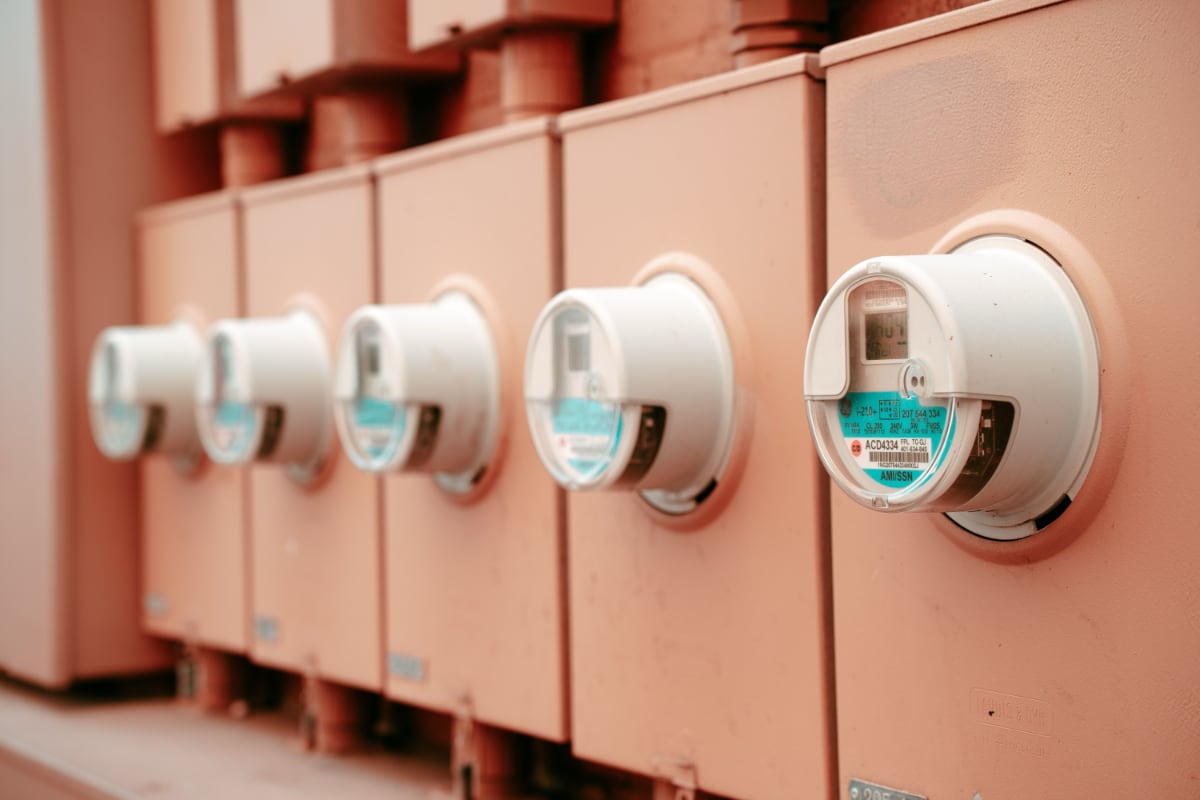
Check the meter itself. A smart meter has a small digital screen. An older, non-smart meter has a spinning dial. If you're still not sure, your retailer can confirm it for you. If you already have solar panels, or your home was built after 2017, there's a good chance you already have one.
See if you can save
Enter your address and compare plans from Australia's leading retailers.
Frequently asked questions
Do I have to get a smart meter?
Will I be charged for my smart meter?
Are smart meters safe for my health?
Will a smart meter change how I'm charged for electricity?
Can I turn off the remote features of my smart meter?
How long does installation take, and do I need to be home?
What if I'm renting, or live in an apartment or embedded network?
When will everyone in Australia have a smart meter?
Keep reading
Virtual Power Plants (VPP) explained: How they work in Australia
A virtual power plant connects home batteries so they act like one power station. We explain how VPPs work in Australia, what they pay, what support applies and what to check before you sign.
What Is an NMI number? How to find yours in Australia
Your NMI is the unique number that identifies your electricity connection in Australia. Here's what it means, where to actually find it, and why it's different from your meter's serial number.
EV electricity plans in Australia: How to choose the right one
Understand how EV electricity plans are structured, what they typically require, and how to work out whether one will actually save you money.